
Products
MindLog and Pulse are at prototype stage. Four more still ahead.
MindLog reconstructs a day from fragments. Pulse is the referee for multi-agent work: scores, guardrails, and the next round of tokens. Both are prototypes you can try today.







Day reconstruction · a day you can replay
MindLog
End-of-day reconstruction. Fragments in, a day out.
Prototype demo
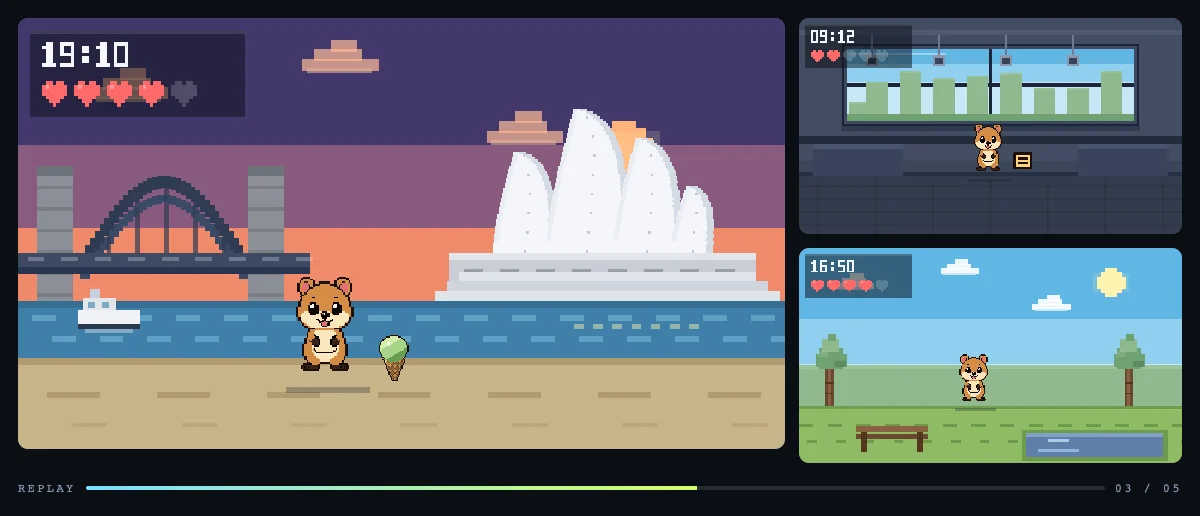
Fragments from the day are parsed, inferred, and assembled into a day you can walk back through. Built for review, not for journaling. A prototype demo is open.
The orchestration layer reconstructs: incomplete fragments become one day's state, thoughts, and scenes.
The research
A day leaves only a few fragments. How do you infer mood and thought from incomplete lines, then rebuild a day you can walk back through — with the curve, the bubbles, and the scenes describing the same day? The question is not a prettier summary, and not a better diary. It is whether a day can be reconstructed and survive replay.
If it works
You stop facing a blank page asking how the day went. End of day, the day is rebuilt — walked back, compared, reviewed. That is the floor for a later personal agent: without a replayable day, an assistant is another round of chat.
Score-driven budget allocation · B2B API
QUOKKA Pulse
A referee for multi-agent work.
Scripted replay
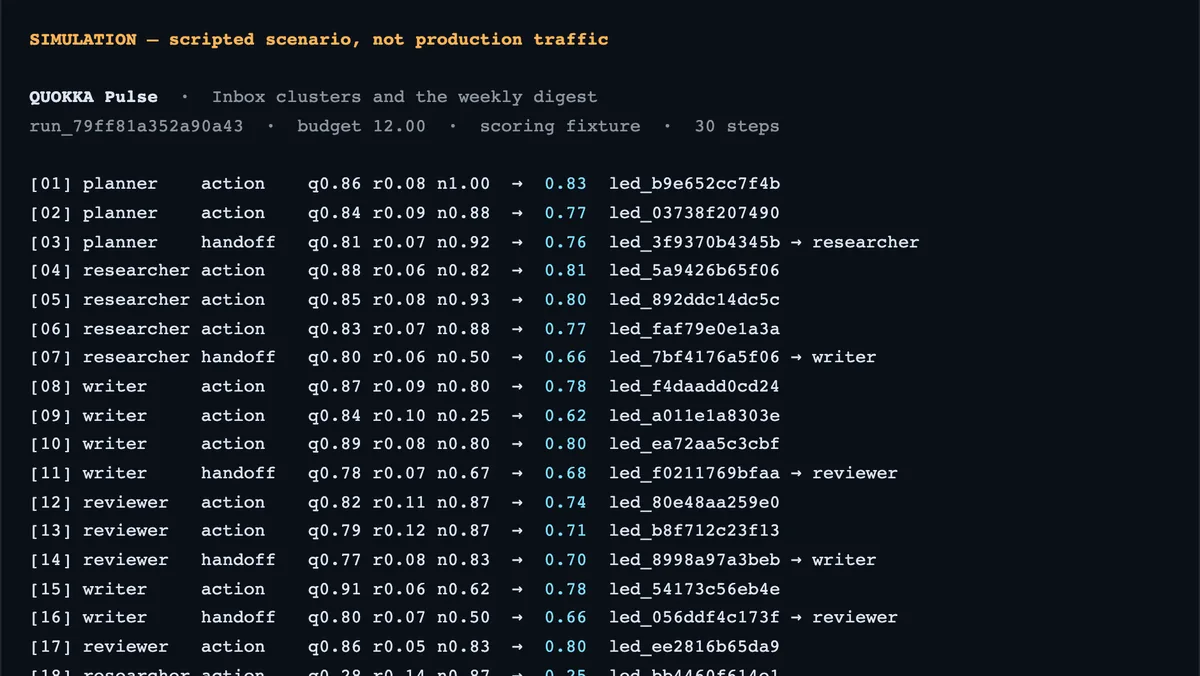
Tracing shows what a fleet did. A spend cap stops it at a fixed limit. Neither decides who gets the next round. Pulse does: every step scored, gamed scores cut, next-round tokens moved to the work that earned them. The API is not open yet.
Prototype replay available. API is not open yet.
The research
A fleet of agents can look busy while the platform cannot tell who finished the work. How do you score every step, stop gaming and busywork, count handoffs and send-backs, and give the next tokens to what earned them — with the same input reproducing the same decision? The model proposes. Rules adjudicate.
If it works
Multi-agent work gets a referee, not just a scheduler. Tracing already records what a fleet did, and spend caps already stop it at a fixed limit. Neither decides who should get the next round. Pulse turns the score into that decision: what a step was worth goes into a ledger, a gamed score is cut before it becomes reward, and compute stops being split evenly or by guesswork.
On the App Store
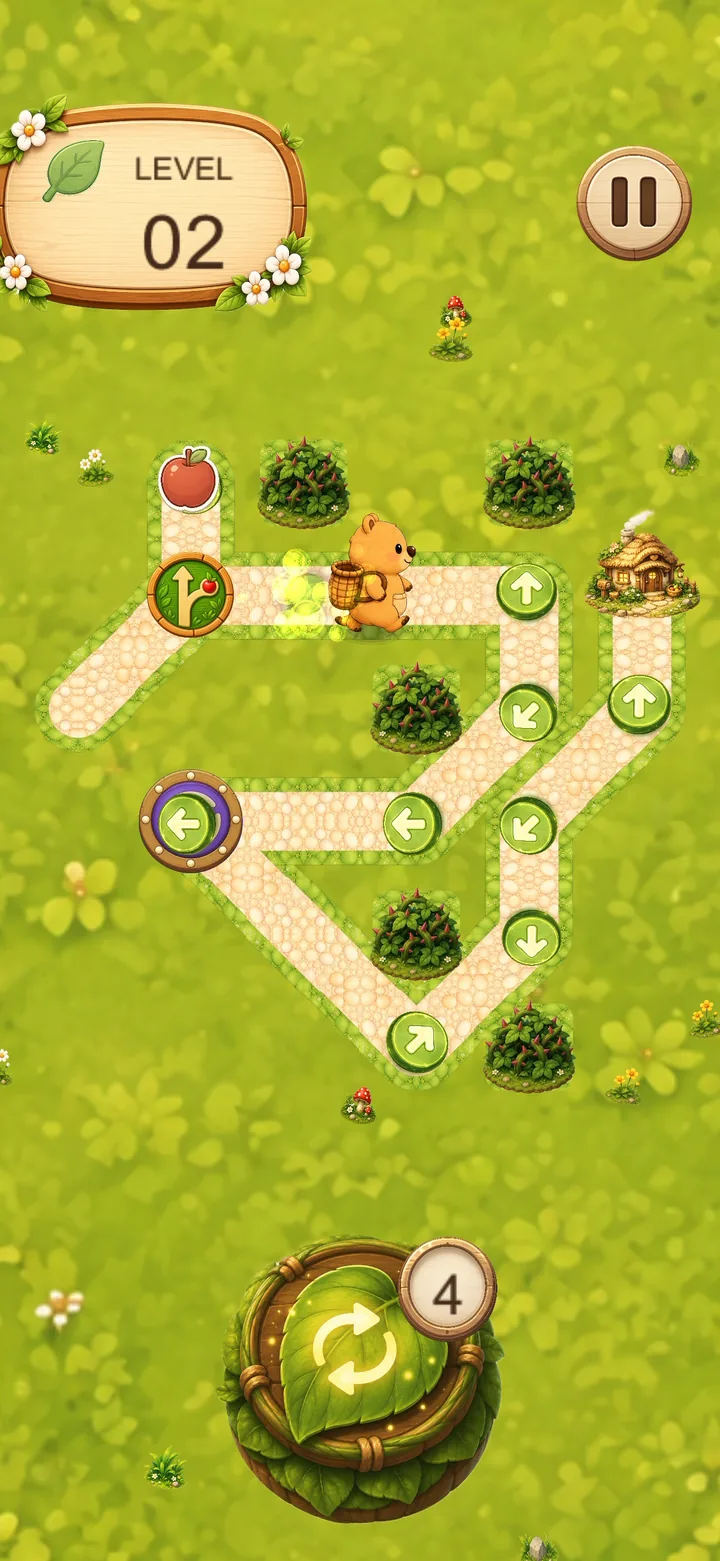
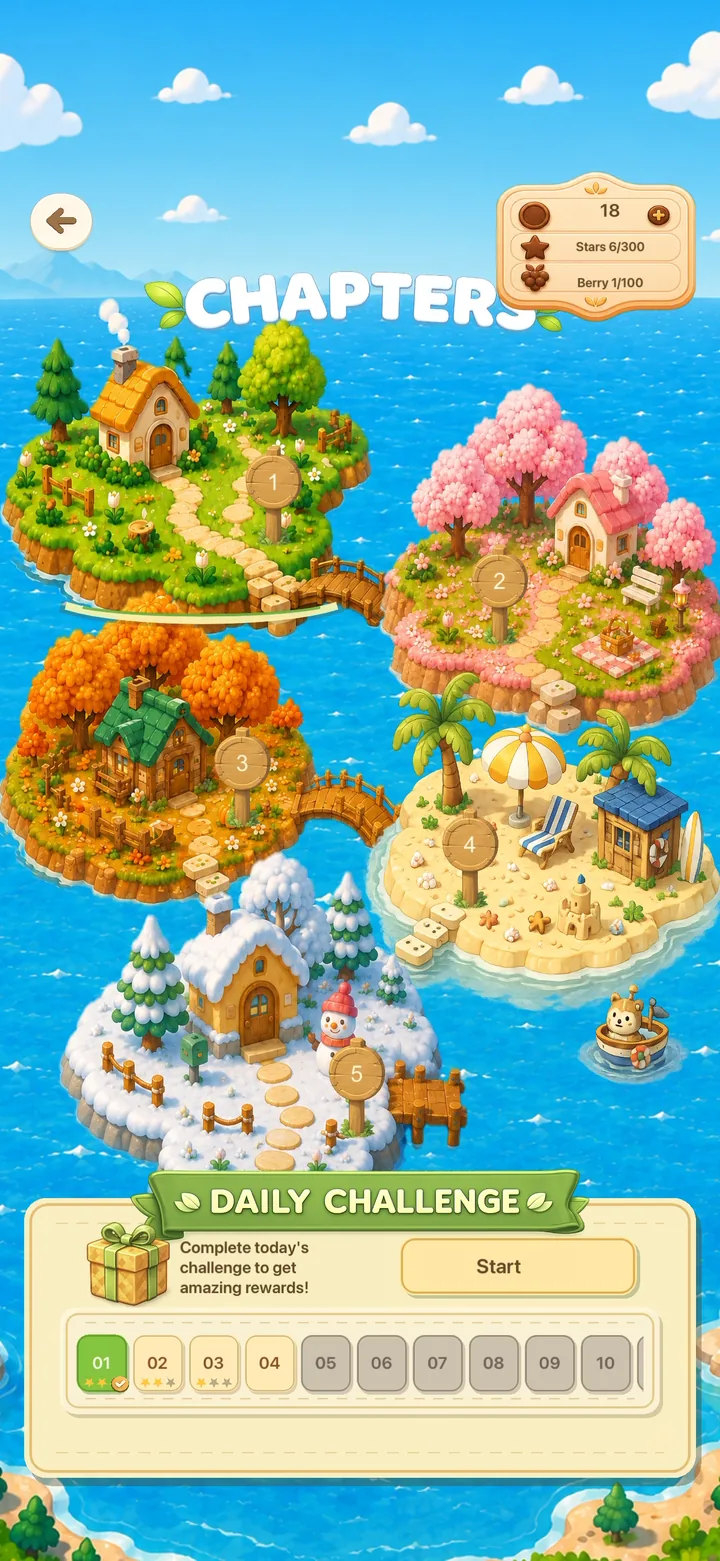
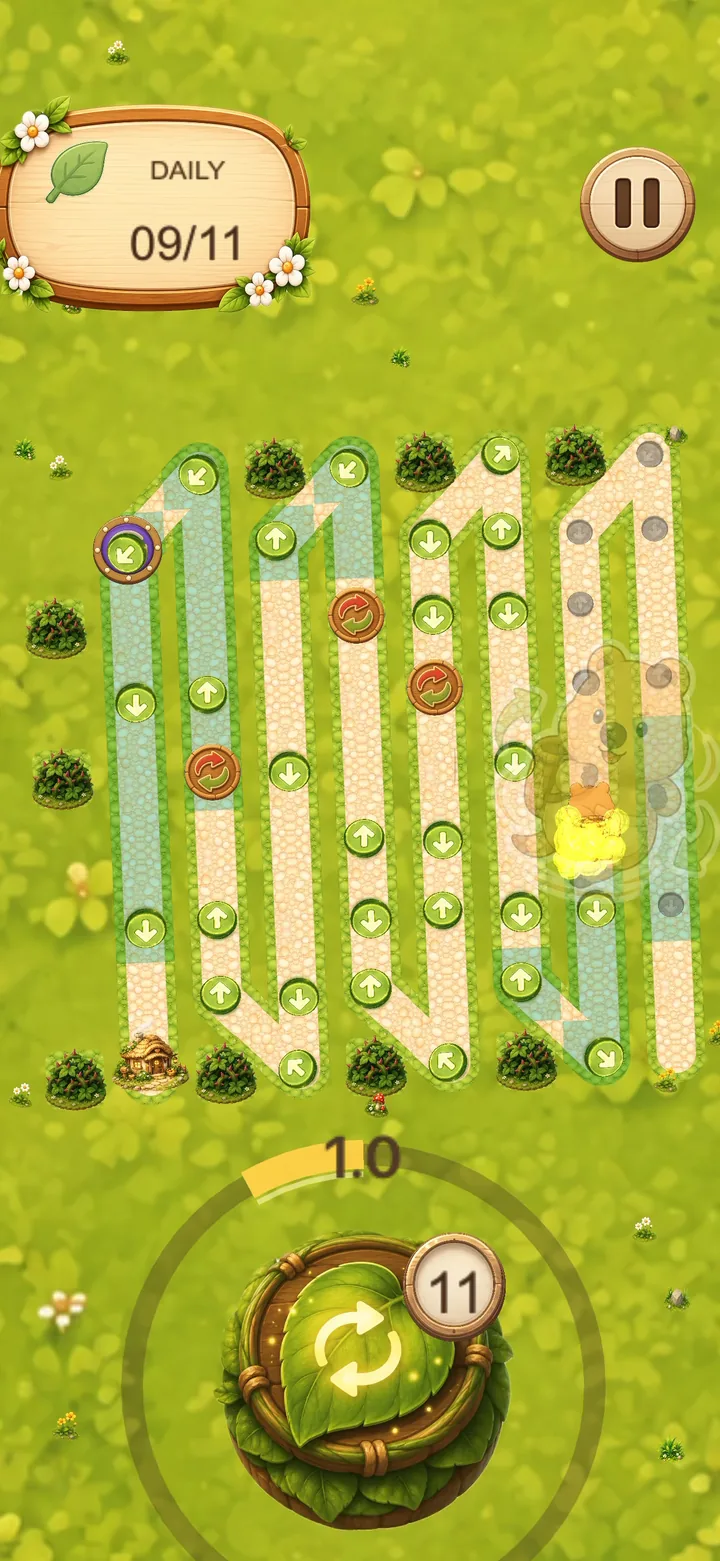
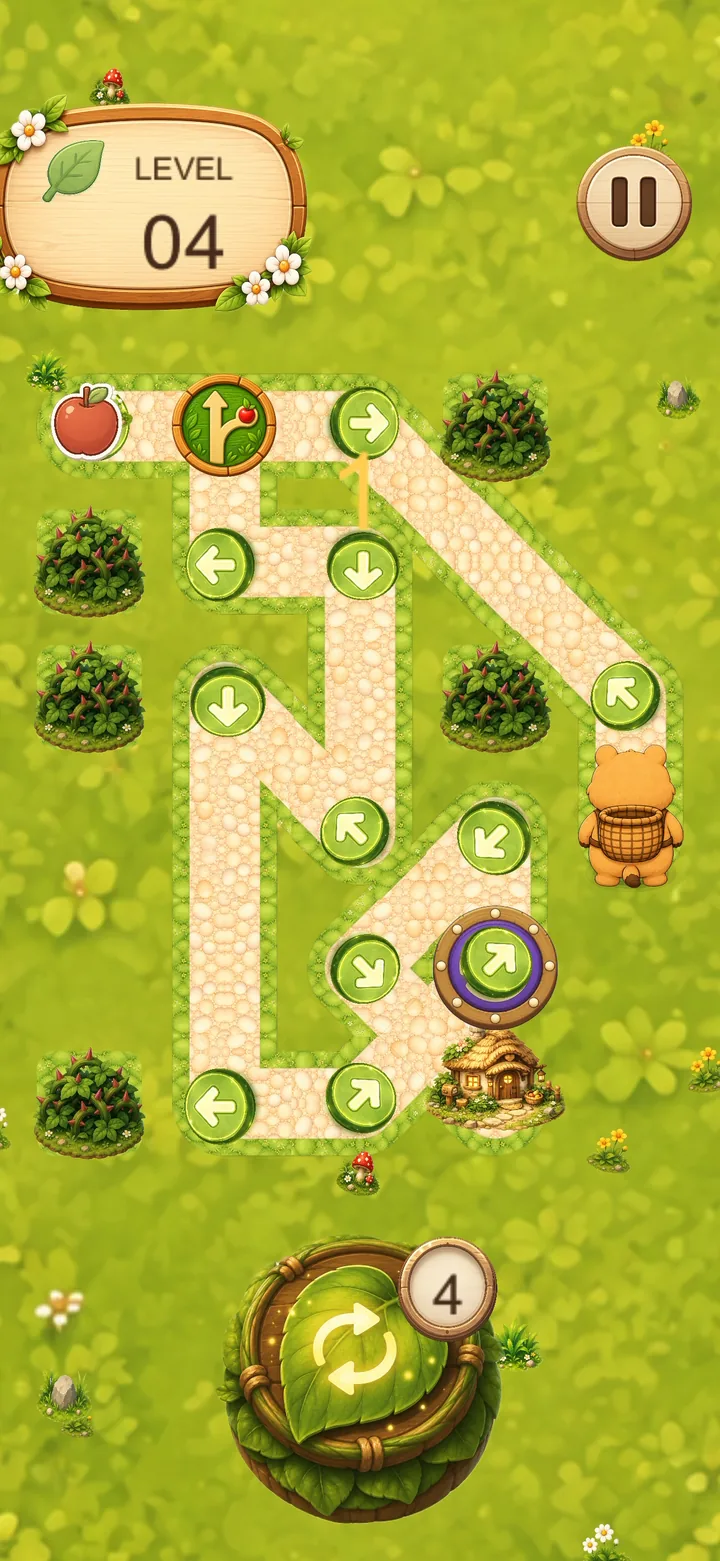
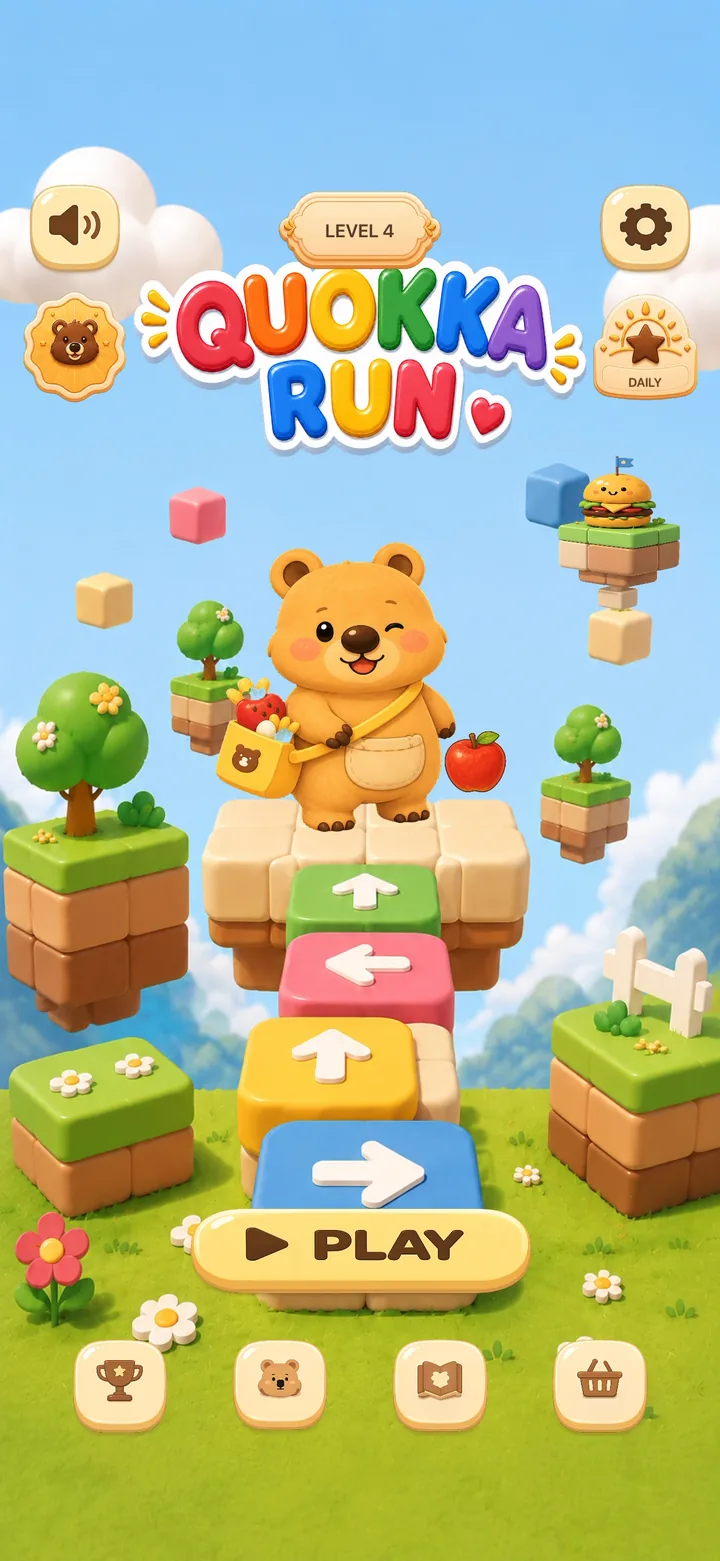
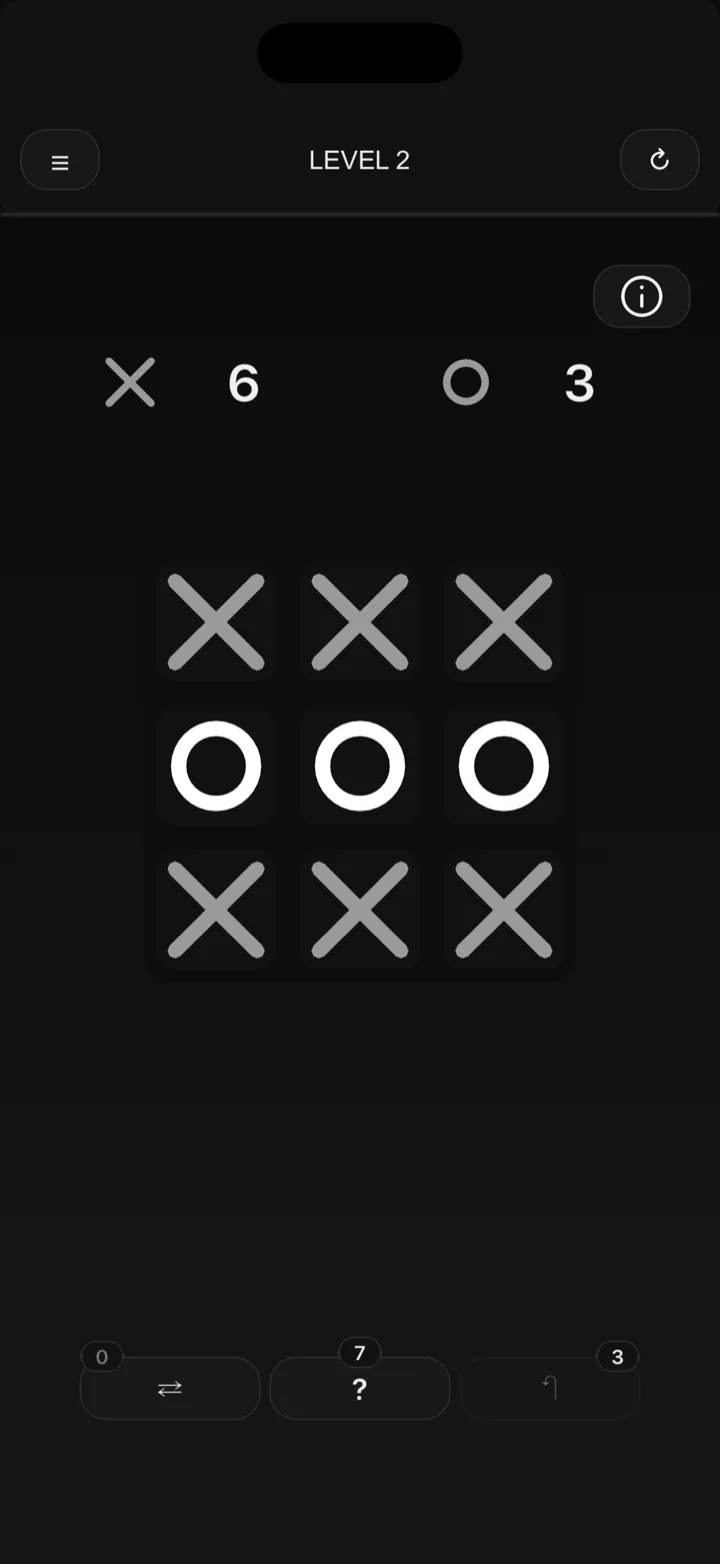
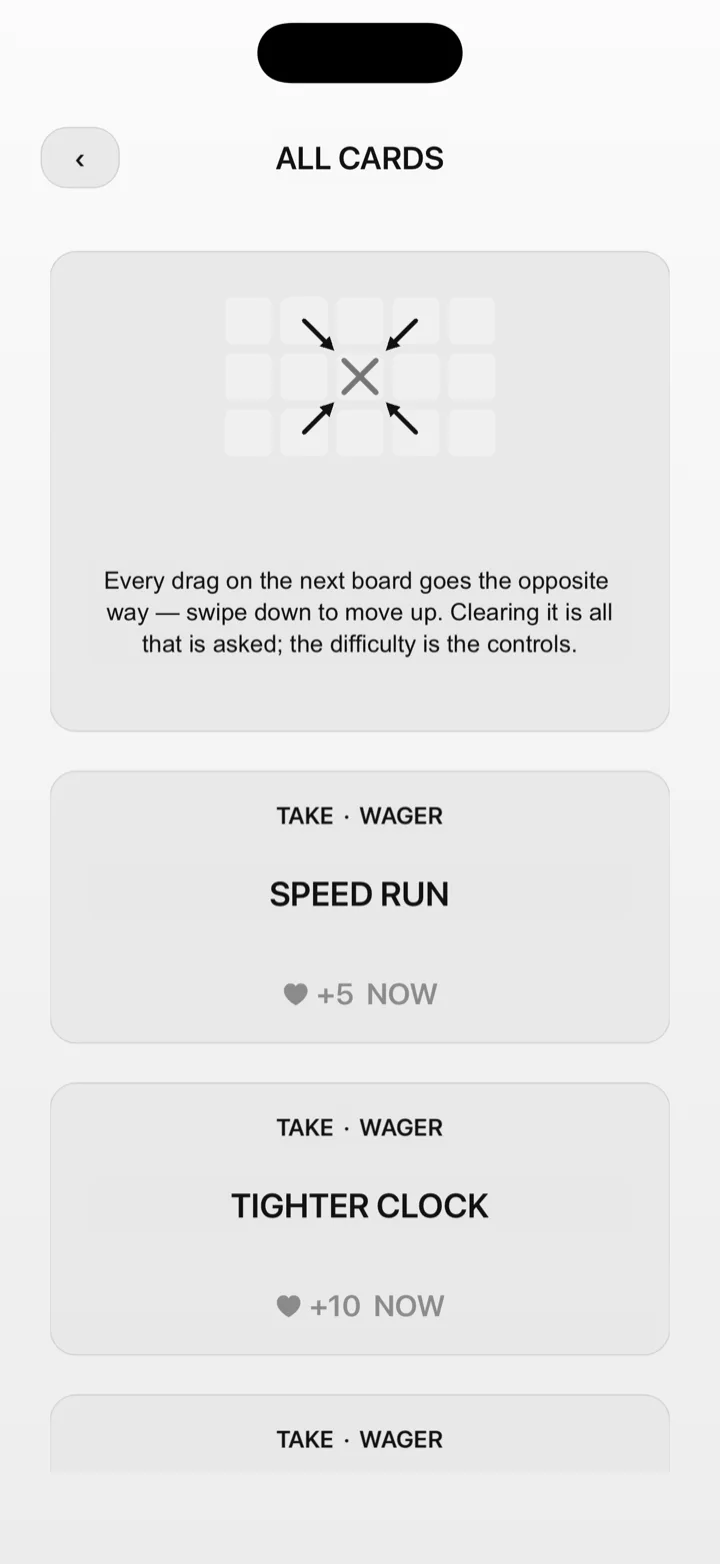
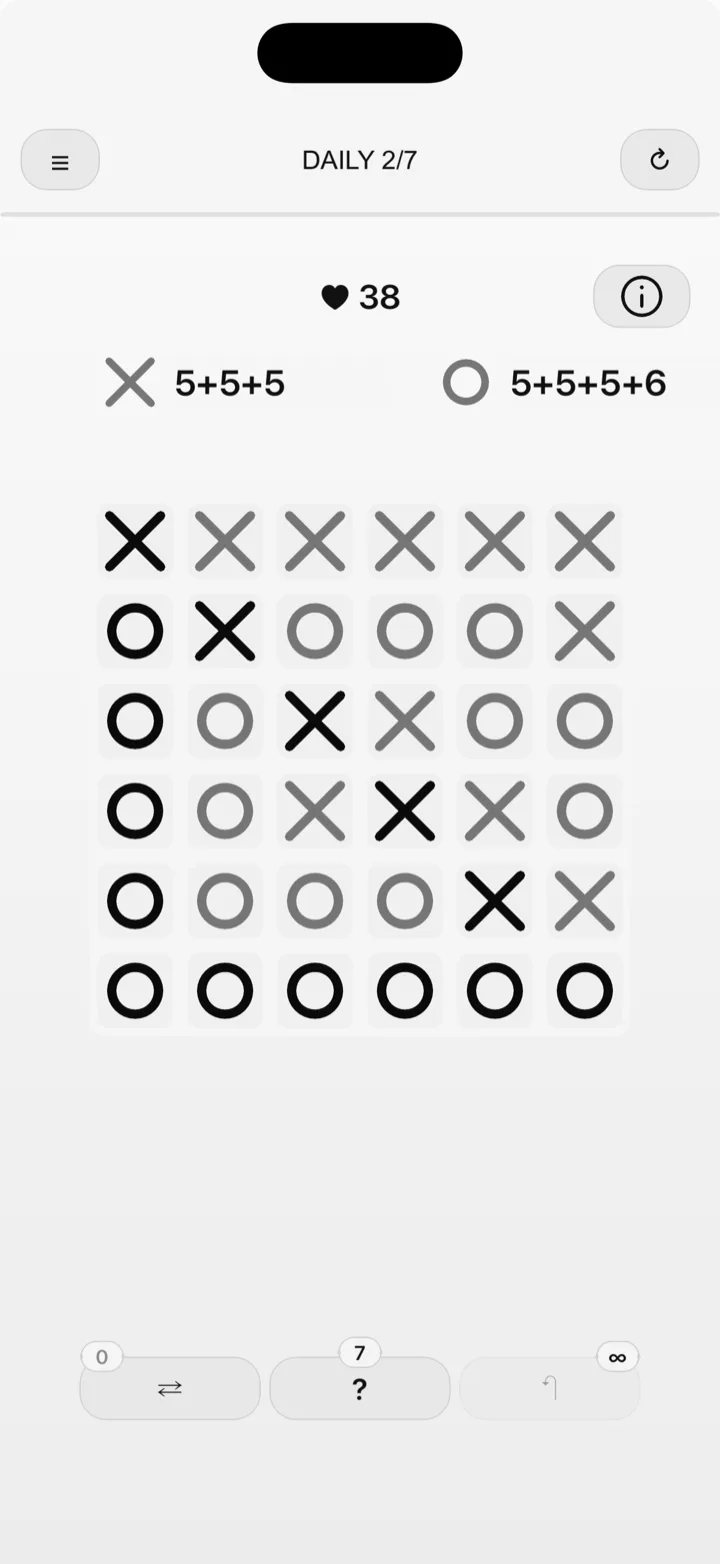
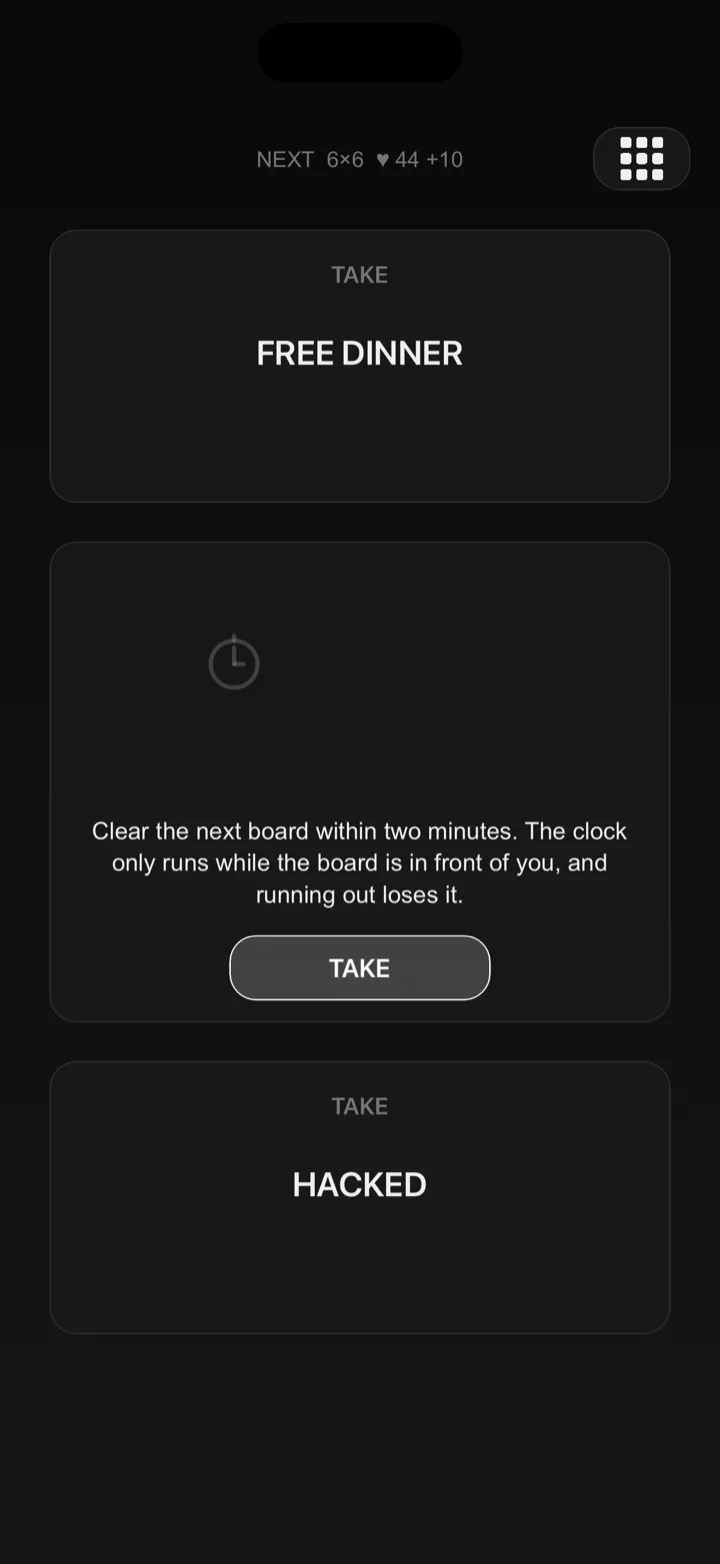
Two games you can already play.
Planned
Four more products. Still in planning.
Same orchestration layer. They’ll show up when they’re ready.
Orchestration runtime
The shared layer multi-agent products run on.
Generative game
Worlds, scenes, and characters generated as you play.
Agentic automation
Agents that finish the work, not just the turn.
Multilingual product content
Generated content that holds up across languages.
Work with us
Want to see them first?
MindLog and Pulse are at prototype stage. The orchestration layer is already in place. Talk to the team to follow along.